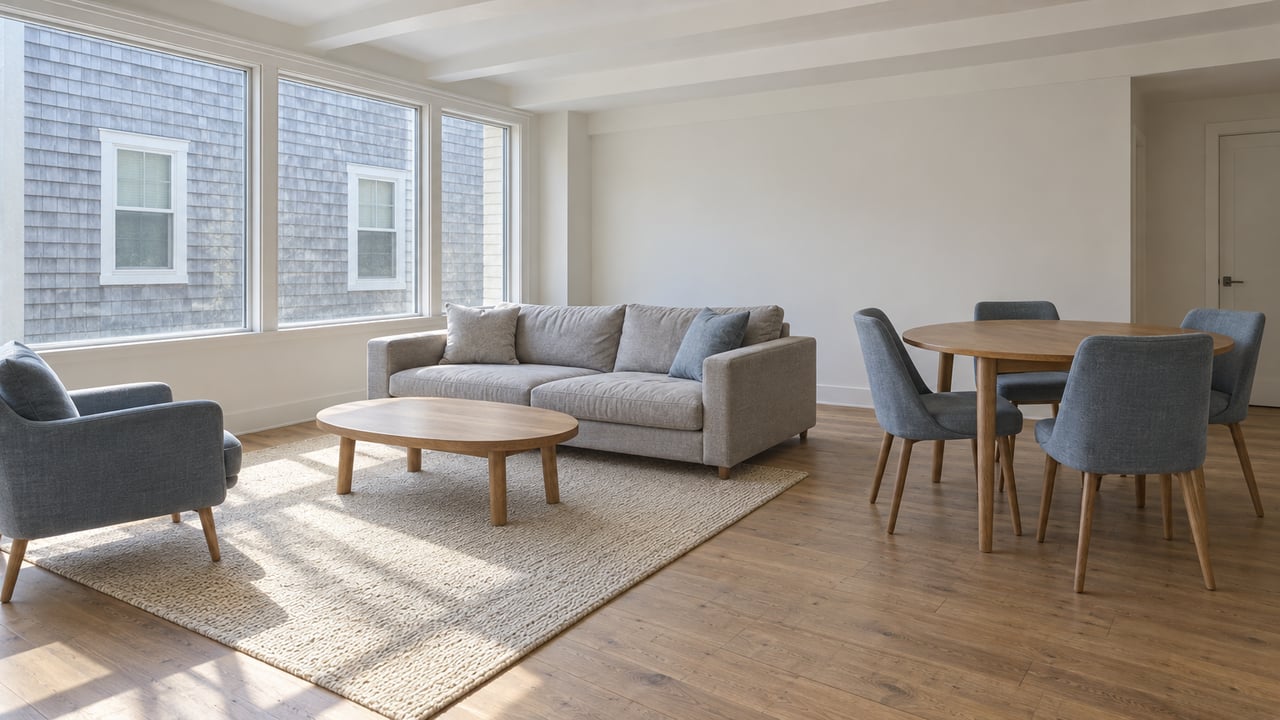
A couple bought a three-bedroom condo at the Sea Watch in November 2025. It was listed as a three-bedroom, appraised as a three-bedroom and mortgaged as a three-bedroom. On December 2, the Town of Ocean City sent them a letter. A prior owner had put up three walls about 20 years earlier without permits, so in the town's eyes the unit had two bedrooms. The owners had 30 days to take the walls down or face fines of up to $1,000 a day. OC Today-Dispatch reported that the walls and door came out. Because the building was short on parking, the rental license they eventually received was for two bedrooms.
The town's rental inspections have raised questions about licensed occupancy in Ocean City condos.
The Occupancy on Old Licenses Was Whatever the Owner Wrote Down
For years, Ocean City issued rental licenses on the honor system. "We were issuing licenses based on what the owner asked for, without inspections and without verification," Deputy City Manager JR Harmon told the Council, according to the same OC Today-Dispatch report. Staff said they accepted whatever occupancy the owner put on the application.
That changed in August 2025, when the town began inspecting its more than 8,600 rental units over a five-year rotation. By the Council's May 2026 review, staff had completed 1,041 inspections: 941 passed, 100 failed and 27 violations were still open. The town's Rental Hub says properties are scheduled for inspection on a random rotation running from 2025 through 2029.
The pass and fail counts don't show how much a unit's licensed occupancy changed. Owners and property managers told the Council that some recently inspected condos had their maximum occupancy cut, in some cases by half. City Manager Terry McGean said the standards themselves were not new. "There seem to be a lot of misconceptions in the room that this was a new code that had just been passed, and it's not," he said, as The Baltimore Sun reported.
Enforcement is also the direction the town chose after its short-term rental fights. After the Council repealed the R-1 rental-license moratorium in February 2026, McGean told WBOC that staff had been instructed "to fairly strictly enforce the regulations that are on the books."
The Council's Occupancy Standards
On June 1, 2026, the Council adopted Ordinance 2026-18 on second reading by a 6-0 vote. The City Solicitor's memo in the June 1 agenda packet lays out the standards:
- The living room and dining room together must be at least 120 square feet.
- Every bedroom must be at least 70 square feet.
- A bedroom with more than one person must have at least 40 square feet per occupant.
- A closet at least two feet by five feet adds up to 10 square feet to that bedroom's area.
- Every dwelling unit gets two more occupants on top of that, except efficiency units, which fall under a separate section of the code.
When staff first presented the formula in May, McGean said the new calculation applies to units with at least 120 square feet of living and dining space, and units with less would be treated as efficiency units. Councilwoman Carol Proctor said many of the town's older condominiums don't have 120 square feet in that combined area. Staff looked at whether that minimum should change and concluded it didn't need to.
The ordinance also says living rooms, kitchens, bathrooms, closets and lofts can't count as sleeping space and can't have a bed. Outside single-family and mobile-home rentals, town staff won't tell license holders what furniture belongs in a room.
A Bedroom on the Listing May Not Be a Permitted Bedroom
The inspections also turned up illegally converted rooms. In the Sea Watch case, the extra bedroom had been there for about two decades. It came through a sale, an appraisal and a mortgage, and it was still removed after closing.
Harmon put the question directly in front of the Council. "Here's where we are running into issues, and we can't unsee it. It's illegal conversions," he said, and asked whether the seller or the buyer is responsible at the time of sale. "If it's illegal, it's illegal, and it hasn't been permitted," he said, adding, "It's not an easy answer."
"We cannot, at the staff level, go in and unilaterally, on our own, change the law, or say because you didn't know about it we will overlook it," McGean said.
The Number on the Seller's License Has a Shelf Life
A buyer touring units this month will often see a licensed occupancy that came through an exception. On May 12, 2026, with Memorial Day weeks away and owners reporting canceled bookings, the Council voted 7-0 to honor the occupancy on owners' most recent rental licenses. Council President Matt James called the situation "a PR disaster," and Councilman Jake Mitrecic called the vote an "amnesty." The Baltimore Sun reported that it runs through the end of the calendar year.
As of this week, the end of the calendar year is about seven weeks away. The Council's stated reason for the amnesty was to protect summer 2026 bookings while a longer-term fix was worked out, and Ordinance 2026-18 was that fix.
Renewal has its own rules. The Rental Hub says existing licenses renew online, the renewal portal opens one month before a license expires. The town's fee resolution adds a 10% late charge after 15 days, then 2% more every 30 days.
Ocean City Rental Records and Fees
The town's public records include rental license and permit information:
- Current license status. The Rental Hub links to a "View Current Rental Licenses" GIS map and the rental license portal.
- Permit and violation history. The town's online records page points to Laserfiche, where you can search historical permits by street or address, plus newer permits filed since May 2020. The record types include building permits and violations. A bedroom count that doesn't match any permit is worth asking about.
- The seller's licensed occupancy, and its source. Ask whether the unit has been inspected under the current program or is operating on its last pre-inspection license under the amnesty.
- Rental license fees. A condo's rental license and Noise Control Permit cost $196, and a short-term rental license adds $50.
This post is general information, not legal, tax or financial advice. Before you rely on any occupancy figure, confirm how the rules apply to your unit with the Town of Ocean City and the right professional.
If you're weighing an Ocean City condo as a rental, I'll help you gather the license history, permit records and room measurements before you commit. Patrick Sommer is licensed in Maryland and works with investors across the shore. Let's Connect.